Thursday, March 01, 2007
Strange Signs
I took the afternoon off, and found time to go to Paramount books, the secondhand shop on Shude Hill. Like other 2nd hand bookshops I've visited lately, the prices seem to have risen and the range gone down - the unintended consequences of internet selling, I guess. I bought two books, science fiction writer Bob Shaw's "A Wreath of Stars" and Stuart Home's "Tainted Love." Here's from the first page of "A Wreath of Stars" -: "Snook was determined to do much the same thing on his linear course from birth towards death, and - at the age of forty - was well on the way to achieving his aim." And here's the first line of Stuart Home's novel, "when I was 40 I decided I wanted to meet my (m)other." I didn't read either first pages in the shop, just they were books I was interested in having, I checked the price and condition, but that was all. Now what is the likelihood that I could pick up two books, of the many in the shop, which mentioned being "40/forty" on the first page? Never mind that I'm going to be 40 on Sunday. Strange signs indeed - but I always knew that Shude Hill and its bookshops exuded magic, and wrote about it in "The Four Hills of Manchester." That 4 again, as well...

Wednesday, February 28, 2007
Class of '97
It was about this time a decade ago that I had an interview for the MA in creative writing at UEA. It was an interesting thing. I'd applied the previous year but, obviously too late, got a gnomic response which said, but "try again next year". I didn't even have to send something new in. Anyway I went for the interview - the first time, though it seems hard to believe in retrospect, that I'd ever even met some other writers - and Andrew Motion, who was interviewing gave us all an overview of the course. I was the only male among the 5 being interviewed, and at the time Motion was on heavy painkillers for a back problem, which meant by the time I went in, last, they were clearly wearing off. We had a nice chat for 20 minutes, mostly about poetry, (I'd applied to do fiction!) and that was it. I didn't get on. Not that I was too surprised, since 2 of the other 4 being interviewed were already published novelists (both did get on!) and the others were a nice elderly woman who'd been published by the London Magazine, and one of those "Isn't my lecturer?" wonderful English 1st students from Oxford. Anyway, it did make me think - yeah, I'd like to do this, really. I went to the campus bookshop after the interview and picked up "The Game" by Frances Liardet (she was one of the 2 published novelists being interviewed!) an impressive debut novel that she appears never to have followed up. A few weeks later I was interviewed at Manchester, by a relaxed and convivial Richard Francis (where we mostly talked about fiction!) who said, at the end, "don't worry, you're on the course." I've never regretted that choice. What was a shame was that by the Christmas, Michael Schmidt had virtually pulled out of the course for much of the 2nd semester, and, by the time my novel was ready to be submitted, Richard had also left. It was marked by one of their successor's Suzannah Dunn, a nice woman I met a couple of times, but whom I never had a single conversation with about my actual novel. Richard, at Bath Spa, and Michael at MMU, went on to departments that took it all far more seriously than Manchester. The week that I moved between London and Manchester was the week Princess Diana died, so I had a weird few days in a half empty flat watching endless cavalcades of people on a pilgrimage to Hyde Park to put down flowers. I was reminded by this by the success of "The Queen." Its worth remembering that the death of Diana, and the Queen's original perceived indifference to it, almost looked like bringing the monarchy down at the time! Diana's brother's speech at her funeral became a set text in English classes in schools - and "Candle in the Wind" rewritten by Elton John became the bestselling single of all time. My own novel, that I wrote on the MA, began on election night 1997, but ended the weekend before her death. My Class of '97 I still feel very fondly about. It was a very civilised group - none of the factions that other years have seen develop, from what I hear. Mark Powell got a 2 book deal with Victor Gollancz a few months after completing his course, and had 2 good London-based thrillers, "Snap" and "Box", which got a bit lost in publishing politics (in quick succession he lost his imprint and his editor.) He now lives in the US. Heather Beck, already an academic, quickly went with Michael to the creative writing course at the MMU, where she finally published her course novel "Home is Where" with Comma Press. Always a fastidious writer, she doesn't appear to have followed it up. Lee Rourke, resurfaced a few years later in Brighton and London, with his Scarecrow web-zine, and now, a decade on, a forthcoming book, "Everyday." Others from the course: Stephanie and Greg have continued their previous work, teaching English and photography respectively, though Greg has continued writing, and had a successful exhibition collaborating with the photographer Dinu Li a few years ago; Seb emigrated to Australia; Samantha is back working in radio for Radio Shropshire; and Alan is now a journalist back home in Northern Ireland. I've not really heard anything from Lisa, Sarah and Doug for years; and Peter, a German writer, who left the course half way through, though I'd heard had gone back to Germany. As for me, I'm sat here, writing a blog, about the Class of '97, ten years on, still creative, but in another career cul-de-sac, not that dissimilar than the one I found myself in a decade ago, wondering...what next?
Tuesday, February 27, 2007
The Deerhunter
I had to share the lovely news that David Cameron, Tory leader, often seen as being in favour of all things green, and frequently worrying about the guns in our inner cities, likes nothing more than shooting deer, and is a good shot, often going to his wife's stepfather, Viscount Astor's country estate to do it. Whereas his youthful pot smoking can be put down to the quality of an Eton education, and is at least open to most people who've got a dodgy scally mate, I don't remember ever getting a chance to go shooting deer myself. I think we can easily get too het up about the bloodsports issue, compared with factory farming etc. etc. but there seems something so deliciously "of type" for such a high caste Tory, about David's newly unearthed hobby. And I know for a fact that there's more than a little crossover between the eco-greens and vegetarianism, which might put Cameron permanently off the plate as a voting option, however many wind turbines he installs. Surprisingly, or not, given the bad news values of our press, its not been particularly big news. Now, if only someone can get a picture of him with his first kill!
Sunday, February 25, 2007
Some stuff
Tom at Parameter Magazine kindly pointed out that I'd finally made the blogs-about-books column in Saturday's Guardian. So you can read my blog to be pointed to an online article which is an extract from my blog. Isn't that clever? I'd not got the Guardian having been tempted by the free hardback of "A Clockwork Orange" in the Independent. For the next 24 weeks you can get a hardback "banned book" for £3.50, and with a list including quite a few I've not got - and quite a few where my wellworn paperback is looking decidedly shabby - if I can work out how the offer actually works, I may build up a little collection this way. The mysterious minds of marketing departments. And here's another one. Apparently, the first "benefit" I'm going to get of NTL becoming Virgin Media, is that Sky One is likely to be pulled from air this week. What has flabbergasted me is that that they're moaning that Sky was charging too much and so its all Sky's fault. I don't care. All I know is that a package that I've been paying for, with certain channels included, Sky One and Sky News for instance, is suddenly going to not include them. How NTL/Virgin pays for them is their own problem. So, tonight's "24" could be my last! Where will I get my torture-fix from now? Well, it is work tomorrow. Since I'm probably going to be too busy to blog over the next week or so, its worth me mentioning a reading organised by Matchbox magazine at the Thirsty Scholar in Manchester on March 21st, with Allan Fisher and Scott Thurston. So a little while away, but worth putting in your diary.
Saturday, February 24, 2007
Critical Cultures
Perhaps inevitably the Guardian, having absently referred to Martin Amis as possibly our greatest living writer, decided a more scientific approach was needed. Yep, they asked the audience! Or rather anyone they could get on phone/email the day before the article, with the winners being Pinter, Stoppard, Lessing and Naipaul. Its always a spurious pastime this one, like looking for the world's oldest person, as soon as they find one, they die. Lets hope those 4 have a little more life left in them. We might be best just sticking with the nobel winning Pinter, currently being revived for his little masterpiece "Dumb Waiter" (a version of which I saw at the Edinburgh festival 2 years ago and loved). With 123 comments on their blog and counting, I'm hardly wanting to add to the spurious conversation. What interested me more was the somewhat degraded critical culture we have nowadays. I guess when questions such as this got asked in the past, there was a sense that (a) literature mattered, (b) that its finest practitioners were something more than "mere" writers and (c) the whole culture benefitted from acknowledging these collosi. For a start...writer of what? The "accident" of our greatest writer, Shakespeare being a playwright, has perhaps given playwrighting a little more kudos than it deserves. I can read Pinter's plays, and one or two others, but Stoppard, despite being such a verbaliser certainly needs the active stage. In fact, seeing "Rosencrantz and Gildenstern are Dead" last week, I was struck by, despite it being an assured performance, what a period piece it risked becoming, and mostly it was the reverance for every one of Stoppard's weaker pieces of wordplay. He was a young writer, when he wrote it, and I felt he was ill-served by the too faithful version. Yet, if a playwright isn't known by his words, then how important a writer is he? And if a playwright, why not a screenwriter? I don't think an American audience would be claiming great literariness for Tarantino, or even Robert Townes, yet the film or the the TV play seems more vital to our culture than the theatre. That leaves just poetry and fiction; the first having so little cultural power in the UK, whilst the latter being so market-driven, that its hard to make a case for most practitioners of either. (And I'd say there are very few who write both poetry and prose to a consistently high level.) And then what is "English" in this context? The Irish writer? The commonwealth writer? The stateless writer? Again, its the Booker definitition of anyone but the Americans but also including those domiciled here. Born or living in Britain (make that London) and they're a British writer it seems. Which, given our love of Conrad, Eliot, Pound and James, never mind sundry Irishmen, seems only fair. But then we have the arguments that make those of us who occasionally still care about English literature scream; namely, the votes for writers who are children's writers (Rowling and Pullman), or commercial writers (bloody John Le Carre again), or this year's thing (Zadie, David Mitchell, Sarah Waters.) Any argument that can include all these different criteria clearly needs a good look at the question. Probably Alvarez, that unfashionable type of writer - a good critic - puts it best, "greatness has to do with range - and character....There has to be some kind of moral force in great writing...and an inward quality that shows in the rhythm of the prose." By this description (as good as one that we'll find), the thriller writers, the children's writers, the young writers, and the like wouldn't even enter the argument. Alvarez wouldn't apply the word "great" to any British living writer. It's hard to disagree.
Tuesday, February 20, 2007
The Return of Khan Singh Kumar
A few years ago there was a little controversy in the Rialto about a poem that had, if I remember correctly, appeared elsewhere, and a worry that the poet who'd written it wasn't real but a pseudonym. Khan Singh Kumar, a plausible enough name to us deaf English ears, but unpick it, and see what you've got is a common muslim, sikh and hindu name in one person. Daljit Nagra has been picking at our preconceptions for a while yet, and I was a little suspicious of the blanket positive reviews of his debut Faber collection "Look we have coming to Dover!" until I read the poem "Booking Khan Singh Kumar" and remembered that Rialto controversy. Nagra is acutely aware of the advantages and disadvantages of being a "punjabi" poet, even if his parents came to England in the 1950s, (about the same time my parents were meeting up in Walsall). Through hook and crook, he's negotiated the myriad requirements of an "ethnic poet", by being ethnic when he wants to be, and not when he doesn't. KSK it appears, was a bit of a performance poet, and makes occasional appearances in this collection. But Daljit can "do" punjab, like I can do Brummy, as a bit of a turn. It would be better if the collection was called "Contradiction, and?" rather than the faux Lawrence immigrant misphrasing of "Look we have coming to Dover!" Faber knows what its doing, of course, yet its a fascinating thing that several decades after "A House for Mr. Biswas", a non-white indian-origin poet has to fall back into idiom to get noticed. That he revels in these contradictions is a somewhat remarkable triumph, and though I'm sure Matthew Hollis at Faber is revelling in the good reviews and the "new voice", they're still pushing Daljit's ethnicity as something new, rather than - what they should be doing - is noting his sense of humour and his self-awareness. I'm as sucker as the next man for a new voice, and you can't argue with a poem called "Kabba Questions the Ontology of Representation, the catch 22 for "black" writers", with its disdain for "the HBC" of "'eaney, blake and clarke". Yet its the richness of experience elsewhere, and the self-awareness that makes this a joyful collection, not the political labels. I happen to think the award winning title poem is a bit of a misfire, full of the worst kind of assimilated English poetry, and the patois of the opener"Darling & Me" is disjointed, albeit entertaining; yet elsewhere its a refreshing collection. New voice? Yes, I think so, but not necessarily because his parents were born in India.
Thursday, February 15, 2007
Martin Amis Lives Upstairs (or at least in the humanities building)
It's fascinating to hear that Martin Amis is to be the new Professor of Creative Writing at the University of Manchester. The new university has stated its ambitions, and this must be a sign that it means them, though one wonders how this one came to pass - coinciding as it does with his return from Uruguay - did Amis's agent tout him around or did the University wine and dine him? I suspect a bit of both. But what's more intrigueing is what is he actually going to be "professor of." I studied on the MA in creative writing there in 1997-1999, which was then four or five years into its life, created by Michael Schmidt and Richard Francis, and so unloved by the university that it wasn't even in the English department (which seemed to be mostly made up of Anglo-Saxon experts) but in American Studies. Richard left for Bath Spa, and Michael moved to MMU, taking not only himself, but quite a lot of kudos with him. Although for a couple of years after I finished I would meet fellow alumni of the University course, since 2001 or so, the only people I've met on the Manchester literary scene have come from the Writing School at MMU. The University's course had, as far as I knew, withered a little on the vine. Yet, Amis's arrival will surely require more than just a continuation of what's already gone on. I would imagine a flood of applicants - particularly from overseas. For too long English writers have been sniffy about these saw of roles, whilst universities, often happy to employ a certain kind of academic timeserver, have been sniffy about writers as somehow not "proper" intellectuals. No more, it seems. Rather than a berth for a hard-up poet, we've now got the most legendary of English writers. I hope the university gives him the support he needs (not least in fielding the much greater application postbag you might expect.) Checking on their site, they do at least have a poetry strand as well, which will be interesting. Amis, despite his father being a poet as well as a novelist, never having shown much interest here. I've his essay collection here, "The War Against Cliche", and there's Milton and Donne (that first at Oxford, remember?) but not much recent. I hope he finds time for the poets as well as the novelists; and of the novelists, avoids like a plague, those - like myself, I have to admit - who were so enraptured by his style c. "Money." It makes a lot of sense in many ways, him taking on such a role, and in Manchester as well. There's no Ladbroke Grove here; but he might wander down Stockport Road and check out the melting pot of Levenshulme. But more than that - Amis has always been serious about what he does - so like him, or loathe him, (I remain firmly in the former camp), he is a voice to be reckoned with; authoritative even when he is wrong. It's interesting that in the Guardian feature he talks about having become more right wing in being away; and finding fault with the increasing anti-Israeli, anti-American bias he finds in the UK. He's right about that - much of it's hysterical - but he might find himself a target, being here. After all, the Mancunian left is very pro-Palestine, and sees any opposition to America or Israel as an unfortunate byproduct of that belief, rather than as something to be worried about unduly. I imagine a few robust chats with Terry Eagleton in the corridors of power; though as always these professorships don't guarantee attendance. Manchester is no Ivy League campus; I doubt we'll find him in Kro2 or the Sand Bar, like his equivalents at MMU. I'm particularly intrigued - as well as jealous that he's come here so long after my own masters - because he's been more than just an indirect influence on my writing. One of my few published stories (in Main Street Journal) was a tale of literary paranoia called "Martin Amis Lives Upstairs." What was - then - a fiction, could a decade on, be something of a truth.
Wednesday, February 14, 2007
Waiting for Stoppard
I'm going to see Rosencrantz and Gildenstern are Dead at the Library Theatre tomorrow. Looking forward to it - I studied the play for A level over 20 years ago, but have only ever seen it live once, so it will be interesting to see how much of it I remember. An overdue bit of culture, I think, having spent more time standing up in front of an audience lately, than being in an audience. I'm having very vivid dreams at the moment, and got lots of half-formed poems and songs bouncing around my head like they've o.d'd on caffeine. "Loosely" the collection I was going to put together as a pamphlet around Christmas, already seems to be unrepresentative of what I'm currently writing, so I've put it on hold for now. I'm reading a very long novel at the moment, and at the current rate - about 10 pages a day - it will be Christmas before I'm done.
Saturday, February 10, 2007
Musings
I've been "upgraded" which seems slightly sinister, but really means that I can just use some of the new Blogger features, whether I want to or not. That's the thing with technology, it will never just leave you alone... There's a new edition online of the excellent Barcelona Review, and it even includes a Quiz about music and literature, which makes me think I should maybe do my own quiz one of these days on the blog. It all seemed a little heavy metal for me - surely its not just bad music that's got literary pretensions? I'm getting a bit of connectivity fatigue, I think. My website hasn't been updated for ages, nor my Myspace, and this blog seems far more reactive of late than it was ever intended to be; just "I read this in the Guardian" type stuff, which wasn't the intention at all. I've not found time to complete a couple of print things I was working on, and I think given this, I'll probably need to do a bit of streamlining shortly, else I'm never going to get anything done. I've been writing/recording a few new songs, mainly getting to grips with a new piece of recording equipment, so that's a project with a long gestation period as well. I realise I've not sent much of anything off to much of anywhere recently, nor - to be fair - read many of the new magazines that have come out recently. But then I do have quite a busy day job, so its probably not surprising. This week I worked 3 evenings, giving a couple of presentations about "what makes a good (and bad) website", and that means its been a weekend of just catching up on things - though taking Friday off - I did manage to move a few things along. I've a story that might fit into Transmission magazine's "survival" theme, though it seems its another magazine where my stories don't quite fit, in general. It's like this piece on "the offbeat generation" - it should be my natural home, but I don't think it will be, anymore than in the People's Friend. Times like this of course that you start thinking about starting a magazine, but I've been there, done that. All musings, really, nothing concrete.
Friday, February 09, 2007
Reformation Post TLC - the Fall Return
I've been listening to new music this week. The new Bloc Party album "A Weekend in the City" is very different than its debut, its full of epic choruses and shimmering musicianship, rather than the edginess of old. In about 1984-5, alot of the post-punk bands, on their 3rd or 4th album, developing a new level of sophistication, went down this route. It reminds me a little of latterday Chameleons, or those Liverpool bands like the Pale Fountains and the Icicle Works. Rousing choruses, like the last Doves album, but a little samey in that epic grandeur. It always has the possibility of falling into Meat Loaf/Queen territory, which probably won't harm its sales any, but the lack of edginess is a bit disappointing to me, since Bloc Party were the edgiest of that group of new bands that came out about 2 or 3 years ago - and once you lose your edges, as the stone once said, you can't get them back. The Klaxons album is more fun, already a virtual Greatest Hits, and kind-of nostalgic of those bands like Carter USM, Beloved etc. who did similar pop-dance albums back in the day. New rave, same as the old rave. It's took 3 listens to begin to appreciate the new Fall album, Reformation Post TLC. I think the opening 3 tracks are probably as good an album opening as the Fall have ever done. The sound is bass heavy, uber-metal, kind of like Black Sabbath's "War Pigs" stripped of the bombast. Not for the first time, I wonder, how on earth did anyone ever think the Fall were/are a "punk" band? There are several Fall sounds of course, not just the bass-heavy driving art rock of the title track. Merle Haggard's "White Line Fever" is a nice addition to Mark E. Smith's country rock e.p. for instance. "My Door is Never" (open), is a great piece of bile, whilst "Coach and Horses" is as wistful as "Bill is Dead." Who knows what to make of Eleni's sung "The Wright Stuff", we're not in the land of "O Brother" here. The album could have ended on "Scenario" and you'd have a great tight Fall album reminiscent of "This Nation's Saving Grace", but of course that doesn't happen. The electronic mish-mashes that have accompanied the band intermittently over the years surface towards the end of the disc. The epic repetition of "Systematic Abuse" recalls nothing other than "Repetition" itself from their debut album, "Live at the Witch Trials". I've always felt Smith hates the compact disc, and its like the music towards the latter part of Reformation Post TLC is trying to escape from the limitations, fighting digitally with the medium that carries it.Or maybe that's just me. The new band are good musicians, but not great, and the production is a little deadened throughout. I found both "The Real New Fall LP" and "Fall Heads Roll" excellent song collections, whose best tracks would pepper any future Fall compilation, but I didn't listen to them all that much. It will take me more than 3 listens to appreciate the new album, and having only heard a couple of the songs live, and without the familiarity of Fall sessions, outtakes, singles etc, the new Fall album may well be their freshest in a decade.
Sunday, February 04, 2007
The Weak End
Ah, it's after 9.00 in the evening on a Sunday. Where did the weekend go? And moreover why aren't I watching "24"? I can't cope to be honest - not on a Sunday, when I've got to get read for work, and busy, busy week, giving presentations and other stuff. Jack Bauer will have to wait until I can cope with this fictional terror (as opposed to the others sorts - Bird Flu! Iraq's Civil War!). And I'm in the middle of a few things as well. Its took all weekend to get to a position where I'm ready to have a weekend, to be honest. Managed to write a little poem yesterday, but "little" is the word. I've been reading a bit as well, but not so far into a book that its likely I'll finish it, but we'll see. I'll mention it when I get a bit further. I'm playing catch up with all the music I've got downloaded etc. and rather than download any more its got me going back to my records, and - in between times - digitising them. I've been listening to some classic Prince, which is bloody great. Do people talk about Prince or listen to him anymore? I'm not sure. I guess the sound of the records is a bit eighties - all that synthetic drums, and high pitched squeaky keyboards, but no more than people still rip off. All of his arguing with the record companies etc. means that he's never been reissued/repackaged except in Greatest Hits form. There must be a 20CD boxset in there somewhere! Perhaps I'll wait. I've been trying to write something vaguely meaningful - or do something vaguely meaningful - about Manchester's getting the "super casino" licence. This article from Victoria Coren in the Observer is good at unpicking the arguments, and adds that "the super-casino will regenerate Manchester like the Luftwaffe regenerated Coventry." It's W.H. Auden's 100th anniversary, and the papers have got quite a few retrospectives, which like all such things, takes you back to the poems. Steven Waling wrote recently that he didn't like Auden, and I think part of the problem is that Auden suffers from having a digestible "selected", the existing ones are too partial or two worthy. Are you listening Faber? (Probably not.)
Saturday, February 03, 2007
No time to blog
I've had no time to blog, though not for the creative reasons of Fiction Bitch more just because I've had a full on week at work. Last weekend's London trip was supposed to bookended by a couple of duvet days, but I was just too busy. Faced with a packed schedule one relaxes alcoholically I'm afraid, so things have also been a bit hazy, and I've had the strangest dreams. The night before last I passed John Ashbery on the stairs as I went to attend a university seminar in what looked like a greenhouse or roof garden. It was definitely him! How strange... though perhaps the arrival of one of my missing Ashbery's - "Chinese Whispers" - was the cause. When I was in London, my friend Adrian Cross told me he was reading on Resonance FM, London's art radio station. He was on Wendy Jones' monday afternoon show, "interesting conversations" though I don't think its archived. The Marvin Suicide show is a bit of a find, since it trawls the web for interesting free music so that you don't have to! Somehow this led me to Escape Pod, a sci-fi podcast site, and - and this is a real recommendation - Radio Radio, the online archive of an art project that was in Manchester a few years back. I just now need to find the time to listen to the whole of Victor Mount's wondrous "Disco of the Spoken Word" - an extract of which was on the CD.
Sunday, January 28, 2007
Room to Live (Remainder by Tom McCarthy)
I've finally got round to reading the much lauded "Remainder" by Tom McCarthy, (Alma Books). After an accident, its narrator wins 8 and a half million pounds compensation; yet this narrow premise is really just a jumping off point for what comes next. The book is one packed with detail, often mundane, as we see the recreation of episode upon episode. In many ways, the book could have been called Deja Vu, since its this physical recreation of past (and not so past) scenes that creates the narrative. I had my own sense of deja vu, in parts, since its set in almost the exact same locale, Brixton, as my London novel, and this mundane sense of place gives an extra dimension to what is otherwise in every sense rootless. You always got the sense that the existential writings of Beckett, Camus and others was at least partly a response to the diaspora of post-war Europe, where everything from country borders to national identity had been ripped up - it seems that a new generation of writers (McCarthy is under 40), are faced with a world that is so unknowable, that the fictional response to it can only be through this kind of fascinated ennui. Whereas McEwan and Amis might use their London backdrops as credible settings for high drama, McCarthy is surely writing a more grounded and at the same time a more elevated kind of fiction. The writing is both taut, and unshowy, and it will be interesting to see if that "style" is just that of his coma-victim narrator or a constant for him. The flat, plainness will appeal to fans of Magnus Mills (of which I'm one), almost obsessively non-showy writing, yet you get the sense that McCarthy is holding in or holding back. When he releases his "bombs" they are never predictable even if you have half guessed what is coming. I read the book slowly, since I think the slow build up of non-events can be a little difficult to digest, even boring, and it might be this "ennui" rather than the forward tension of the latter quarter of the novel which kept it away from the prizes - yet its far better at doing this than Ishiguro's misfiring "Never Let you go." There's a modernity to the cultural references that is both thrillingly now, and, a bit like Mills, slightly off centre. You kind of think that McCarthy might be using "remembered" experiences rather than anything more real. The Dogstar, a Brixton institution; Psion organisers; "History Repeating" by the Propellorheads, speak of a gestation period that goes back to the last century - and, indeed the dot.com crash post-millennium also is an important plot point, that is there from the moment the narrator puts his money in the speculative area of "technology" shares. Precedents for the book must include John Fowles' iconic "The Collector" where a similarly ordinary man comes into money and uses it for less than orthodox purpose, or the re-staged car crashes of Ballard's "Crash". Here, as in "The Collector", we are drawn in by our unreliable narrator. He prods us - we like him - his fictional precedents will go back as far as Knut Hamsun's early modernist classic "Hunger". Yet, the subject matter here is far from any "brutalist" or "new puritan" manifesto. The things that our narrator wants are the stuff of reality tv shows; of "through the keyhole"; of "the Truman show". It is almost all men who have praised this novel, and I can see why in some way. The novel is about an extreme form of Obesessive Compulsiveness. There is a short ride from the narrator's obsessive recreations to the listmaking tendency of a certain kind of male; or even all the way back to the mad wall-hangings of John Nash in "A Brilliant Mind." At some point, he complains about how all his actions - even those before the accident - seem inauthentic or learnt. I don't think many women would recognise that awkwardness, but it seems almost endemic in the modern male psyche. The female characters are nearly non-existent, useless cutouts, there for only formulaic purpose. It is the men - the old friend who thinks he should spend his money on hookers; the various faceless professionals - lawyer, broker, logistics specialist, doctor, bankrobber - he calls in at various points, who are complicit in the "game" that he is involved in. Here it almost fits into that "greed literature" genre that gave us "Money" and "Bonfire of the Vanities", but it seems to only do this in fits and starts. We are in a recognisable world, which is rendered ever more mundanely, but in doing so becomes a more frightening plot. He is not creating Frankenstein's monster so much as Gatsby recreation of a dream. I'm reminded of when Gatsby's parties end, when the house is no longer anything other than an empty stage where these things were once put on. Inevitably, the book gets darker; it would not survive its own ennui, if McCarthy wasn't willing to draw us further in. Yet he does not seem particularly interested in a logically drawing back into his characters' past; more in an exploration of what horrors we are capable of when so single-mindedly following a pyrrhic objective. Like Saramago's wonderful "Blindness", allegory can only go so far; "Remainder" has to survive according to its own internal logic. That it does this, is its triumph. I'm not sure whether it has the wider canvas required to be a masterpiece; but as a first novel of a driven, if circumscribed, ambition, it succeeds admirably.
I read it bookending a weekend in London, where, despite now having an Oyster card, the travel still takes its toll. Everywhere was so busy! I remember a few years ago how empty London sometimes seemed in January, but not any more it seemed. My once favoured bookshop, in Balham, was overpriced and understocked - I fear for its health - and fear that the internet may have added interesting secondhand bookshops to its list of approved kills. Never mind; its always a little reassuring to know that London's both still there, and, at the same time, so impossible (house prices, the tube, the tired faces).
I read it bookending a weekend in London, where, despite now having an Oyster card, the travel still takes its toll. Everywhere was so busy! I remember a few years ago how empty London sometimes seemed in January, but not any more it seemed. My once favoured bookshop, in Balham, was overpriced and understocked - I fear for its health - and fear that the internet may have added interesting secondhand bookshops to its list of approved kills. Never mind; its always a little reassuring to know that London's both still there, and, at the same time, so impossible (house prices, the tube, the tired faces).
Sunday, January 21, 2007
Time Enough at Last
Dear Guardian readers, I occasionally buy the Times, so that you don't have to. Only joking, but their books section is often far better than the Julian Barnes Supplement that is the Guardian's. Where do I start? A feature on the Paris Review interviews, which Canongate, obviously anticipating my birthday, is making available in book form. Then, Elaine Feinstein's article on the 100th anniversary of the birth of one of my favourite poets, Louis Macneice. My favourite poem is "Meeting Point" from 1939, effortless in its language, beautifully lyrical, both solemn and serene. He died a few months after Sylvia Plath, but is lodged in the memory as a "thirties poet." Time enough at last, to uncouple him from that and read him for himself. Faber have got a new collected out now, and its already in my shopping basket. All this, and a poem from Margaret Atwood which will be of immense help, I would think, to anyone seeing an aged loved one fade away. There was also an article, elsewhere in yesterday's paper about Mark E. Smith of the Fall, confirming yesterday's post of it being "the year of the Fall." I went to see "The Last King of Scotland" last night, about Idi Amin, and its a powerful, intense movie, that only occasionally falls into cliche. What it lacks in visual literacy, it makes up for, as you might expect from Kevin "Touching the Void" Macdonald, is a ratcheting up of the tension, as sat inside the court of Amin, we get the glimpses of a regime turning from popular acclaim to terror, in small glimpses, whilst always being equally affronted/charmed by Forrest Whittaker's brilliant portrayal of the dictator.
Saturday, January 20, 2007
Hit the North
Not sure if the Fall have ever written a boxing song to go along with their various football ones, but Manchester's favourite son, Ricky Hatton, fights in Las Vegas for the first time tonight against the Colombian Juan Urango. It's a long way from Tameside to Vegas, yet one can only hope that Hatton's preparation is good enough to win this one. Boxing has long lost its lustre, with too many titles, too much politics, but it remains essentially the same sport as it's always been, whatever the showbiz vagaries that surrounded it. I saw Hatton at the M.E.N. a few years ago and it was a very knowledgeable crowd, all dressed up to nines, like a convention of gangsters and their molls. The theatrics of the M.E.N. is taken straight from Vegas, of course, so I think Hatton will feel at home, though when he comes out to "Blue Moon" will the Americans realise its for his beloved Manchester City? In the week that a 60 year old Sylvester Stallone is re-selling his imaginary Rocky franchise one more time, its worth remembering that a real fight is going on across the ocean.
Perverted by Language
Odd to think that 2007 could be the year of "The Fall." Last year was bereft of new Fall product, though the band changed again and again, and live gigs showed a wealth of new material. The lack of an equivalent of the "Peel Sessions" has meant that new material doesn't get roadtested on the radio like it did. Despite Myspace and XFM and 6Music, its fair to say that we've not really replaced John Peel's show. In fact, like literature, music seems to be a well-trodden path these days, where even surprising stuff is telegraphed well in advance. But the literary and music worlds collide, with a book of stories inspired by the Fall and Mark E. Smith's biography. I'm disappointed that its called "Renegade: the Gospel According to Mark E. Smith". Surely it should be "How I wrote Elastic Man?" for real? Some readers of this blog will be Fall fans no doubt, but others will probably have never heard a single song. A new album, the wonderfully titled Reformation Post TLC, is out in February and intrigued readers could do worse than spending their 40 Free downloads at eMusic on their extensive Fall collection - 458489 - the A sides, and "Palace of Swords Reversed" would be 2 good places to start, and "Extricate" is perhaps there most diverse and commercial album.
Friday, January 19, 2007
Racism Returns
(Courtesy of the Lancashire Telegraph)
THE chief executive of an agency charged with regenerating the North West has admitted sending a racist joke in a text message.
Steven Broomhead, who heads the North West Development Agency, apologised after it emerged he had sent a joke about a Pakistani shopkeeper via text.
He said: "I received an inappropriate text message to my mobile.
"Without thinking, I forwarded the message on to the mobile phone of an individual outside the NWDA.
"Forwarding this message was an error of judgment on my part and is something that I deeply regret.
"It was inappropriate and thoughtless and does not reflect my personal opinions in any way.
Advertisement continued...
"There was no intention on my part to cause offence and I would like to apologise unreservedly."
The NWDA is responsible for supporting businesses, encouraging investment, lobbying for better infastructure and promoting the region's quality of life.
ENDS HERE
Many Local Government employees have been sacked or reprimanded for similar offences, so I do hope that the investigation comes down heavy on Mr. Broomhead. Ignorance, in this instance, is no excuse; particularly given the furore this week over racism on Big Brother. It is worth considering that Mr. Broomhead is on a salary of over £170,000. I like that "Without thinking, I forwarded a message...." I received loads of text messages over Christmas asking me to "forward" them and "not break the chain". It is impossible to "forward" a message "without thinking" after all you have to first of all work out who you are going to forward it to.
THE chief executive of an agency charged with regenerating the North West has admitted sending a racist joke in a text message.
Steven Broomhead, who heads the North West Development Agency, apologised after it emerged he had sent a joke about a Pakistani shopkeeper via text.
He said: "I received an inappropriate text message to my mobile.
"Without thinking, I forwarded the message on to the mobile phone of an individual outside the NWDA.
"Forwarding this message was an error of judgment on my part and is something that I deeply regret.
"It was inappropriate and thoughtless and does not reflect my personal opinions in any way.
Advertisement continued...
"There was no intention on my part to cause offence and I would like to apologise unreservedly."
The NWDA is responsible for supporting businesses, encouraging investment, lobbying for better infastructure and promoting the region's quality of life.
ENDS HERE
Many Local Government employees have been sacked or reprimanded for similar offences, so I do hope that the investigation comes down heavy on Mr. Broomhead. Ignorance, in this instance, is no excuse; particularly given the furore this week over racism on Big Brother. It is worth considering that Mr. Broomhead is on a salary of over £170,000. I like that "Without thinking, I forwarded a message...." I received loads of text messages over Christmas asking me to "forward" them and "not break the chain". It is impossible to "forward" a message "without thinking" after all you have to first of all work out who you are going to forward it to.
Thursday, January 18, 2007
A Lot of Wind
I'm sitting there watching the BBC news, wondering why it's going on about severe weather throughout the country when it seems quite a nice morning here, and then whoosh!, here it comes. Its like its just arrived, on cue with the TV broadcast. For not the first time this week, I've got a lot of rushing around to do, lets just hope I'm rushing in the right direction.
As comebacks go...
The new issue of The Rialto popped through my letterbox this morning, and it includes a short poem of mine, "Because the Beach Needs Sweeping." I had a couple of poems in this magazine about 5 years ago, and they were strange, experimental one-offs, so it's nice that I've had a lyric poem published by them! The editor, Michael Mackmin, wonders why established poets don't send poems to magazines that often - unlike the American ones - unless they have a book coming out. Its a good point, really. I'm not likely to buy the books on the T.S. Eliot shortlist without reading a poem or two from them first. Seamus Heaney won that prize, for "District and Circle." This poem doesn't really make me want to read it anymore than his other books; I just read nostalgia and violence in his poems, more often than not, and neither are my favourite subjects. Mackmin also makes the point that he'd like more political poems - or more poets engaging politically. Its sometimes part of what I do, but I don't think it ever follows immediately from an event. "Was the sequence unknown?" from my last pamphlet, "The Question", was a direct response to the London bombing in both when I wrote it, and its subject, but other poems were more obliquely political.
Monday, January 15, 2007
So that's why I'm poor

I've for a long time wondered how inflation can be so low, when prices seem to be going up. Yes, my CDs and books get cheaper (but only when I buy them secondhand or from a discounter - just look at the RRP of an average novel that's NOT in the 2-for-1), but since most of my income goes on must-haves, (fuel, transport, food), and would-miss (wine, meals, cinema), its not surprising that I've consistently had a personal inflation rate of 2 per cent above the national. Consumer goods, it seems, feature very low in my life, despite the aforementioned books and CDs, and as for air flights, holidays etc. hmmm, chance would be a fine thing.
The red line is me; the green line is inflation. www.statistics.gov.uk is where you need to look, check the button on the right hand side of the page.
Sunday, January 14, 2007
Alice as Alice saw it...
Wow is the only word to describe the British Library's pageturning facsimiles. I've been looking at William Blake's notebook, and Lewis Carroll's original hand-written/hand-drawn Alice. I've been always a wee bit sceptical of e-Books and the like, but here, for once, is something where the web can genuinely give us an experience, whether at home or in a museum, that wasn't available before. I always love seeing the "behind glass" orginal manuscripts in places like the Haworth parsonage etc. but obviously you never get to feel the book or even to really gaze at what they contain. This is more than "scholarship" - it seems to allow a connection with the very heart of the original writer. More Please!
Brave Writers
I am heartened that there seems to be, finally, a little literary rumbling of the complacency of so much published fiction. Here is Rod Liddle, in the Sunday Times, not, admittedly, a journalist whose opinion counts for much, asking "has fiction lost its power?" - that had literature had "started being like every other form of mass entertainment, aiming wide and broad, hoping to alienate nobody." In yesterday's Guardian, Zadie Smith was making a similar point; another writer has emailed her in response to "how would you define literary failure?" as being "so eager to please." It would be interesting to see how Smith sees her own work there - my criticism of "On Beauty" was related very much to this; or at least Smith's obvious love of the cloistered privilege of top-end universities, and the fact that for the middle classes, even failure is only relative, it allows them to return to their pathway, perhaps a little wiser. Expanding on this lack of "bravery" - and I guess its publishers and audiences as well as writers who can create a culture of temerity - it's surely what characterised so much of the post-war British novel. Characters started at a certain point - by the end of the novel they had returned back there - or the status quo had been restored. There is no looking into the abyss; none of the total failure of the social system to look after them that you find in, say, "Mill on the Floss" when the Tulliver's court case is lost. Circularity - implicit in "On Beauty" (and its model "Howard's End") is not necessarily a bad thing, but it does lead to some complacency. Things have happened; but the status quo is returned to. You find it in Kingsley Amis; in Iris Murdoch; rarely, in Doris Lessing or Martin Amis. Of course, it can be as powerful as novelstic tool as any other - a troubled marriage at the start of the novel might be the status quo that is returned to - in itself a knowing tragedy. Liddle is also talking about brave writing; where style as well as content is vital to making a novel matter as more than entertainment. I've long been of the view that a certain kind of "talking point" novel - can be little more than a drama-documentary; not leaving a psychological scar or an emotional revealing. The difficulty, of course, is that if everyone's looking for a "happy ending" (and even in the saddest novel, that "happy ending" can simply be a return to the status quo, after the devastation has taken place), then that will be more what gets written, what gets published. Is it just me, or is there far more complacency in the domestic horror of McEwan's "Saturday" than in "Enduring Love" or "The Innocent", where actions most definitely had costs - not for the peripheral characters - but for the mains?
Wednesday, January 10, 2007
Yee-Haw, a bit of a Round-up
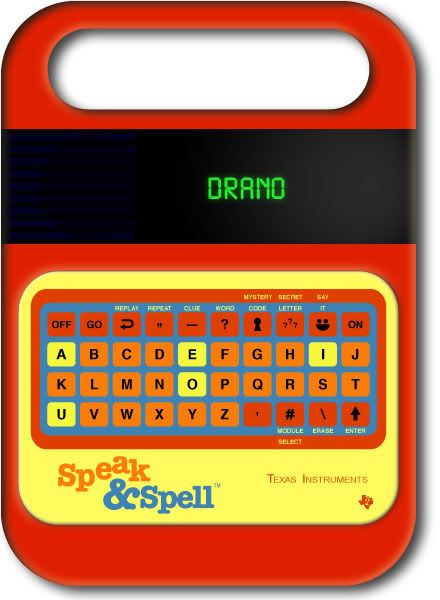
A friend has invited me over to Sheffield to see an intriguing sounding play, "Talking to Space Hoppers." Any other week I'd have happily gone - I've only been to Sheffield twice in my life, and yet its not far by train. Interesting that the unknown (to me at least) poet John Haynes has won the Costa (nee Whitbread) poetry prize for his book "Letters to Patience." Like David Harsent's "Legion" and Alice Oswald's "Dart", these "thematic" books of poetry have really taken all the prizes in the last few years, and yet this development has - to my mind - never really been mentioned. All 3 poets have simply come up with a book that has overturned more favoured names - and it does make me wonder whether the "beauty contest" of contemporary poetry ever really knows what its doing? Perhaps the book length poem, presumed dead since "The Dynasts", has made a quiet recovery? Writing poetry can be hard, and hard-fought (Haynes' book took him 13 years). We tried to find room for longer poems in "Lamport Court," and a new issue, the 2nd solely edited by Neil Campbell, is out shortly. His own first book - a short story collection - follows in March. Magazines remain the lifeblood of a literary scene and 2nd issues should be more celebrated than 1st issues (they're usually far better as well, casting their net further), so I'm sure there will be plenty of people at Manchester Central Library on Friday for the new issue of "Libertine Magazine." In the non-literary world people have been literally falling over in amazement at the launch of Apple's new iPhone. Didn't Speak and Spell used to make something that looked a bit similar?
Monday, January 08, 2007
Ziggy is Sixty
Of all the draw-droppingly unbelievable birthdays, surely David Bowie being 60 is the most astonishing? He remains one of the critical influences on my life. I probably first heard him when "Space Oddity" was unexpectedly reissued to become a number one in 1975. I remember getting "The very best of Bowie" (probably the worst of a whole range of compilations he's released over the years) when I was about 13 or 14, and that probably presaged the amazement of hearing (and seeing the video for) "Ashes to Ashes." Already past his prime - its parent album, "Scary Monsters (and Super Creeps)" is generally seen as the last great album of a run that goes back to his second "The Man Who Sold the World" a decade earlier - I was turned into a Bowie fan more by the prescience of RCA records to cheaply re-sell his back catalogue, at £2.99 each, so that every few weeks I'd add "Low", "Hunky Dory" or "Ziggy Stardust" to my collection. A good time to catch up with Bowie, if not that great a time to be a manic fan (oddities like "Alabama Song", his debatable movie career), I know I'd heard Bauhaus's note perfect version of "Ziggy Stardust" before I'd heard Bowie's. I've therefore got quite a skewed view of his back catalogue - I heard things in the wrong order, and some not till years later. Therefore I'm not a particular fan of "Young Americans" "Aladdin Sane" or "Lodger", since they seemed weak compared with "Station to Station", "Diamond Dogs" and "Low" respectively.
"Let's Dance", of course, was his biggest success - the title track following "Ashes to Ashes" and his Queen collaboration "Under Pressure" to number one - yet outside the singles I've probably not played it for a decade. After that, it was a Bowie that had, after being the ultimate outsider artist (albeit a massive selling one), embraced the mainstream. "Blue Jean", off "Tonight" was probably his last truly great single for a decade or so. Yet every album - even the "Tin Machine" ones - offered hope of a return to form. It's strange, how, in retrospect, the partial renaissance - perhaps since "Black Tie, White Noise" onwards - has made his eighties "blip" seem just that. The musician who'd experimented with electronics, plastic soul and artifice in the 70s was unable to survive the artifice, plastic soul and electronics of the 80s. Somewhere, sometime I've a massive essay unfinished on Bowie - why he means so much to so many, yet is still mistrusted by others. I've seen him twice - both in massive venues and in the last decade - and I'm not sure that I quite believed it was him. I prefer him as the alien he played in the masterful "The Man Who Fell to Earth." Yet, as rock stars go, he's never stopped being what rock stars should be... interesting. I realised, that with his recent heart problem, the gap since "Heathen" is one of the longest in his career. Bowie the businessman is always problematic - Bowie.net, Bowie bonds, endless, endless reissues and greatest hits, which have never quite tempted me to replace my RCA £2.99ers.
A great singer, but a poor interpreter (except where the songs are obscure - like his Pixies and Pop covers); and almost uninterpretable himself. Considering how great the songs often are, they generally defy anyone to do another version (I like the Bauhaus cover, Lulu's "The Man Who Sold the world" and Mott the Hoople's "All the Young Dudes" but that's about it - but have a look here!); and what is often forgotten in the torrent of "Best ofs" and the ubiquitous footage of "Changes" or "Starman", is how rich that back catalogue is. "Quicksand" from "Hunky Dory", "Five Years" from "Ziggy Stardust", "Be My Wife" from "Low" and "Teenage Wildlife" from "Scary Monsters" would all squeeze into my "best of." He's experimented with different bands; different styles; but its only music that aspires to be glamorous - and yes, alien - that has really worked for him. Faced with an r&b, folk or pop backing, his vocal mannerisms sit awkwardly. It is the driving, drama of his glam rock backing; or the glacial avant gardeism of Eno that suits him best. His supporting of those keystones of the alternative - the Velvets, Iggy in particular - would deserve praise whatever else he's done. I hope there's many more albums, however, bad, misconceived, odd or inspirational (on every record there's been a track or two that deserves the latter epithet, "Never Let Me Down" and "Tin Machine II" apart!). For me, he's not the bisexual icon that appealed to Jake Arnott or Anthony and the Johnsons, nor is he the global rock star of "Live Aid" and "Dancing in the Streets", or the elder statesman of "mature" Q awards and live webcasts. Rather, he's the avant garde-ner extraordinary, tending that garden even when at its most barren - making a strangely powerful alchemy of rock and roll, pop, experiment and theatre work time and again.
Happy Birthday, Ziggy.
"Let's Dance", of course, was his biggest success - the title track following "Ashes to Ashes" and his Queen collaboration "Under Pressure" to number one - yet outside the singles I've probably not played it for a decade. After that, it was a Bowie that had, after being the ultimate outsider artist (albeit a massive selling one), embraced the mainstream. "Blue Jean", off "Tonight" was probably his last truly great single for a decade or so. Yet every album - even the "Tin Machine" ones - offered hope of a return to form. It's strange, how, in retrospect, the partial renaissance - perhaps since "Black Tie, White Noise" onwards - has made his eighties "blip" seem just that. The musician who'd experimented with electronics, plastic soul and artifice in the 70s was unable to survive the artifice, plastic soul and electronics of the 80s. Somewhere, sometime I've a massive essay unfinished on Bowie - why he means so much to so many, yet is still mistrusted by others. I've seen him twice - both in massive venues and in the last decade - and I'm not sure that I quite believed it was him. I prefer him as the alien he played in the masterful "The Man Who Fell to Earth." Yet, as rock stars go, he's never stopped being what rock stars should be... interesting. I realised, that with his recent heart problem, the gap since "Heathen" is one of the longest in his career. Bowie the businessman is always problematic - Bowie.net, Bowie bonds, endless, endless reissues and greatest hits, which have never quite tempted me to replace my RCA £2.99ers.
A great singer, but a poor interpreter (except where the songs are obscure - like his Pixies and Pop covers); and almost uninterpretable himself. Considering how great the songs often are, they generally defy anyone to do another version (I like the Bauhaus cover, Lulu's "The Man Who Sold the world" and Mott the Hoople's "All the Young Dudes" but that's about it - but have a look here!); and what is often forgotten in the torrent of "Best ofs" and the ubiquitous footage of "Changes" or "Starman", is how rich that back catalogue is. "Quicksand" from "Hunky Dory", "Five Years" from "Ziggy Stardust", "Be My Wife" from "Low" and "Teenage Wildlife" from "Scary Monsters" would all squeeze into my "best of." He's experimented with different bands; different styles; but its only music that aspires to be glamorous - and yes, alien - that has really worked for him. Faced with an r&b, folk or pop backing, his vocal mannerisms sit awkwardly. It is the driving, drama of his glam rock backing; or the glacial avant gardeism of Eno that suits him best. His supporting of those keystones of the alternative - the Velvets, Iggy in particular - would deserve praise whatever else he's done. I hope there's many more albums, however, bad, misconceived, odd or inspirational (on every record there's been a track or two that deserves the latter epithet, "Never Let Me Down" and "Tin Machine II" apart!). For me, he's not the bisexual icon that appealed to Jake Arnott or Anthony and the Johnsons, nor is he the global rock star of "Live Aid" and "Dancing in the Streets", or the elder statesman of "mature" Q awards and live webcasts. Rather, he's the avant garde-ner extraordinary, tending that garden even when at its most barren - making a strangely powerful alchemy of rock and roll, pop, experiment and theatre work time and again.
Happy Birthday, Ziggy.
Saturday, January 06, 2007
Going Back
I've been leafing through a few old books; anthologies and the like - you don't always read them in full when they come out. Conjunctions is one of my favourite magazines, though its issues are often the size of encyclopedias. Its 25th anniversary issue is just out, but before ordering it, I decided to have a re-read of a couple of issues that it published a few years ago, collecting together a snapshot of current American poetry in one and fiction in another. I say a snapshot, but Conjunctions, as lot of the better magazines with a web presence are, is about the American avant garde. Interesting that a couple of British writers, Jim Crace and Will Self, make the 25th anniversary edition. Anyway, re-reading their "American poetry: state of the art" collection from a few years ago I came across a brilliant poet I'd not read before, C.D. Wright. It appears she's never been published in England, but the prose poems I read - from "One Big Self" a collaboration with a photographer about Louisana prisoners - were rich in language, invention and emotion. She's got a "new and selected" "Steal Away", so I'll hopefully find out more. Going back to the point I made a few posts ago, about the difficulty of keeping up with American poetry, Conjunctions is one way.
Wednesday, January 03, 2007
Delays
I'm still delaying my new poetry pamphlet, "Loosely", from seeing light o' day. A number of the poems needs tweaks, small changes. I'm shedding commas, semi colons and hyphens - I must have been given a job-lot in the summer when I wrote most of these poems. I'm having to replace "reflect in a window" with "reflected in a window" and I don't like either. I'm excising prose-words like "that" and "only". Stripping the engine, putting it back in the poem. It will purr better. Which reminds me, suddenly, of a pseudo-poem (actually a "chapter" of my 250 chapter experimental novel).
WAX CAT
I have a wax cat, she purrs like a candle.
I still like that one. Delays are extending to my latest short story, which needs a clear head (I'm not talking alcohol here, I'm talking all the other detritus) to complete. I'm a little absent at the moment (not from my blog, here I seem very present), waiting for something to happen. I'm like one of the weevil's in Torchwood. They sense something... (Torchwood's been a pleasure, guilty or not, and despite some episodes not cutting it. It's interesting as well to work out what they've ripped off. There's a little of "Don't Look Now" in the last episode of the first series. Oh, and Jack "came out", I guess, though him being gay seems somewhat irrelevant when HE CAN'T BE KILLED.)
See, I can do paragraphs? All that white space. Might have to try a poem...
***
In other news, just read about this intriguing collaboration between Scottish musicians and poets/novelists.
Idlewild and Edwin Morgan, now there's a thought.
WAX CAT
I have a wax cat, she purrs like a candle.
I still like that one. Delays are extending to my latest short story, which needs a clear head (I'm not talking alcohol here, I'm talking all the other detritus) to complete. I'm a little absent at the moment (not from my blog, here I seem very present), waiting for something to happen. I'm like one of the weevil's in Torchwood. They sense something... (Torchwood's been a pleasure, guilty or not, and despite some episodes not cutting it. It's interesting as well to work out what they've ripped off. There's a little of "Don't Look Now" in the last episode of the first series. Oh, and Jack "came out", I guess, though him being gay seems somewhat irrelevant when HE CAN'T BE KILLED.)
See, I can do paragraphs? All that white space. Might have to try a poem...
***
In other news, just read about this intriguing collaboration between Scottish musicians and poets/novelists.
Idlewild and Edwin Morgan, now there's a thought.
Stop, already
I'm getting distinctly tired of "guilty pleasures" and now, "guilty reads." Not sure that Stephen King should be anyone's guilty read. If you like someone, stand up for their writing/music, and if you think they're not that great a writer/singer etc. don't be embarassed to admit it. Stephen King's always been a great writer - probably one of the best writers about childhood in the last thirty years or so, as readers of "Firestarter", "Carrie", "The Body" (made into the film "Stand by Me") and "It" can attest. I've not read any for a while - but seem to recall either "The Dark Half" or "Pet Semetary" as my favourites. I also like "Bridges of Madison County," so sue me - I think its structurally clever, and I like its sentimentality and its morality. I know - as surely everyone does - that we're no better judge today of what contemporary books will stand the test of time than anyone in the past. From Shakespeare to Donne, from "Wuthering Heights" to "The Great Gatsby", the current judgement is more often flawed. I've heard so many people tell me that "Da Vinci Code" is badly written (even people who wouldn't notice such a thing) that I've no desire to read it; but so's "Moo" by Jane Smiley, "Larry's Party" by Carol Shields, and "Anil's Ghost" by Michael Ondaatje; exceptionally terrible novels all. Remember, when Oasis's "(What's the story) Morning Glory" came out, dumb critics preferred Blur's "The Great Escape." Stick by your guns; like what you like; defend your choices; and don't ever call them guilty ones.
Tuesday, January 02, 2007
That was This Life
Just watched the 10 year reunion episode of "This Life." So, don't read on if you've videod it, or watching it on play-again or are going to bit torrent it from somewhere. Yes, "This life - ten years on" was probably the most hypertextual piece of television we've seen since Dennis Potter's swansong pieces appeared simultaneously on the Beeb and Channel 4. The soundtrack was conveniently loaded into Eg's iPod, so we got Everything but the Girl and Massive Attack for the quiet bits, and Manic Street Preachers "Design for Life" for when they were dancing. Music was always an important part of this life, mainly because it was both dashed off (i.e. it was playing incidentally at all moments) and candid (yes, they knew what they were doing.) In a sense it was a rare occasion when tele gets it right - rather than retrospectively adding window dressing (like the tele version of "The Line of Beauty.") Eg, much liked by most of my female friends, remains the most annoying man in television history - soppy, useless, like a pet dog that's none too bright - and he's STILL like that. Only thing is, he's written a bestselling novel about, yes, "This life" the first time round. God, this gets complex. Originally conceived by Amy Jenkins, about her own housesharing experience, is Eg Amy then? And what happened to Amy after that much hyped first bestseller? Never mind, everyone admits the series got better when other writers got involved, which always seemed a little unfair (and I liked the first series alot, just took everyone else a time to get back into it.) A shame that Ramon Tikaram never made the cut (he's the excuse for the get together) but he's tried to be a serious actor ever since and maybe's glad of the let off. This life was always less comfortable when it had characters outside of the main set - and so it is here, where Miles' Vietnamese bride, and Claire, the young northern film maker, are dismissed as soon as they possibly can. The reunion show was ace - because it concentrated on the verbal sparring between the 5 remaining characters. Millie, never the least bit sexy in the original, looked great, whilst Anna was looking a little worse for wear - though not as bad as Miles' long backpackers hair. (And this guy was supposed to be running a chain of hotels?) They were always a bit posh the people in This Life, and in the reunion the Beeb and the writers can't resist a bit of the Richard Curtis treatment. And its not a bad idea - arriving at the hotel, sorry, Miles' palatial home - they're like an Agatha Christie dinner party, and we're left waiting for the first body to turn up. And the body here, of course, is the past. Like a 5-person marriage, what was always so great about the show is how they're all best friends who bring out the very worst in each other. Eg gets turned into a child by sensible Millie (and she really likes that as well - smiling when her real child beats her with a toy teddy to wake her up, when Eg's been up and doing childcare for all of 5 seconds) - the book, remember, was always a bit of a laugh for him, a kind of "I'm not working, I'm an author" schtick that has never worked that well for me! Anna hates Millie's conformity but really wishes she had a proper boyfriend/baby/house etc. whilst Millie would like to be a bit more devilish. Anna's devilishness was always a little overplayed of course - she's a topdog lawyer, as always, and still smokes like a chimney. (Good job they didn't do it next year.) Whilst Warren was always the bit of grease between the other relationships, helping them all rub along together - glad to not be worrying about himself for once. In one of many clever little touches, he's replaced his old therapy sessions with, yes, being a life coach. Though its always been touch and go whether him or Little Britain's Dafydd, the only other Welsh gay in the village, perhaps?, was the least self aware. I guess, the only thing wrong with the show was the speed at which it zoomed through things - like a Noel Coward on steroids (and Amy's first novel was a Coward-filch if I remember rightly). So a good piece of nostalgia for once, and my head's spinning like the tracks on an iPod keeping up with all the subtexts, which is as it should be. Don't know where you'd come back from here? After all, getting back together, like any old group of friends, they eventually fall back to what they were - Milly girly, Eg daft, Miles still trying not to turn into his dad, Warren coming to terms with whatever he needs to come to terms with and Anna being Anna. I can see them again in another decade - yet it would be like being in aspic, their characters unchanging, just life changing around them. If anything they'd all be a bit young to be going all middle aged on us. I wrote my own state-of-the-nineties novel about my year in London in 1996-7, and yet by moving out of there, I missed out on the prosperity of the Blair years. There's a few friends, older than that lot, who'd kind of fit the cliches, but it probably takes a bit longer, and then again, quite a few of them have either not yet made it (still waiting, like Anna, for the house, the partner, the baby...) or simply fled the city for the countryside. As the Manic Street Preachers would have it, "We don't talk about love, we only want to get drunk." That song, of course, could even make the charts next week - since for the first time - ALL downloads will count, they don't need a physical reissue accompanying the song. So, anyone plugging in their iPod tonight for a bit of nostalgia might just be tempted to flash 79p!
Monday, January 01, 2007
New Year
If my blog could have new year's resolutions it would probably be to have a makeover - a new template is probably due, or even a move to Wordpress, we'll see if it finds the time. The post-Xmas period has seen me out late 4 nights in a row. Seeing the Runaways meets AC/DC of Crewe based the Tommys at Night and Day made me feel distinctly old. I'd say they're going to be massive, they're ridiculously good at their instruments, but the music's a bit on the heavy side for the charts. I bumped into my friend who runs the occasional arts and music night, Beat Your Art Out, their next one is in Hebden Bridge of all places. That night saw us come foul of the lack of 24 hour drinking in Manchester, Via Fossa closing at 1.00 and us having to gamely go to the place of no return (the New Union.) The village doesn't change, Italo-house classic "Keep Warm" by Armando was playing as we left Via Fossa. Tune! The following day saw us end up in Common in the Northern Quarter, where I can definitely say that "New Rave" is real and not just a media invention. Though nobody was dancing cos its a bar! Didn't stop them when they put Michael Jackson's "Beat it" on. A friend's birthday the day-before NYE, and then a pleasant meal for New Year itself where we got all competitive with the 1996 "Pub Quiz Book" and the game Taboo. (We were rubbish.) Somehow all these hangovers have helped a little with my creativity: namely I wrote a first draft of a new story that I'm wildly excited about. Before I return to work tomorrow I've been doing a bit of "housekeeping" finding old stories I wrote pre-computer days, which I really should type in one of these days. I even found my "author" photograph that I got done for City Life's Manchester Stories back in the day; good job really, since the publishers lost it as well. Realise I've been writing pretty seriously for about 20 years now - which seems a long, long time; but also, weirdly, could just seem like an apprenticeship. I've been looking through the ragged entrails of my past writings, finding connections, repeated motifs, failed and successful attempts at the same thing. Mostly, remarkably, there's some consistency. Unlike my record collection which flies all over the place. I picked up a rare Captain Beefheart yesterday, but the record player is attached to the computer as I dither about digitising stuff, so haven't listened to it yet. The Waterstones gift vouchers my sister gave me have already been spent: Jeffrey Wainwright's "Poetry: the basics" is something I've been meaning to get for ages, I've never had a poetry lesson/class in my life, and so when people talk about ceasuras and sestinas and the like, I go all schtum. Its a joy to read, and you'll come away from it knowing much more than you did before. Very catholic choice of poets he chooses from as well. That, and Tom McCarthy's heavily recommended "Remainder" should keep me going well into January. I was looking for a decent anthology of contemporary (even post-60s) American poetry and it doesn't seem that one exists. There's a few wide surveys of the more avant garde end of things, which stretch into the present day, but as far as I can see there's no decent "primer" for contemporary American poetry, made available for British readers. It makes you wonder what the Fabers, Carcanets etc. of the world are thinking of? And it may explain this essay in Poetry Review from John Burnside. In brief, Burnside finds himself in a conversation about the American poet Jorie Graham, and from this discovers that almost none of the UK poets at the event have read any contemporary American poetry, or like any of it. Even Ashbery was dismissed by this myopic crowd. I'm not a fan of Burnside's poetry, but this is a brave and important essay that should be a rallying cry. "You don't know what you're missing," he said to them, and he's right, but there's no easy way in to the contemporary American scene. I wish Burnside had named names, surely if that's their view they wouldn't be unhappy to make it publicly known? I think Fiona Sampson, the new editor of Poetry Review, should insist! Happy New Year.
Friday, December 29, 2006
American Mythos
I've been thinking alot about the lure of the American "mythos" - the web of stories and underlying narrative that seems to inhabit so much American art. It's there in the wandering troubadour that was the young Bob Dylan; there again in the songs about cars and girls of the Beach Boys; and there in the deep musical and mythical certainties that seem to inhabit songs by contemporary artists like Midlake and the White Stripes. Clearly there are lots of different stories here; but the sense of space - the sense of escape - the sense of exploration - the sense, I guess, of freedom are key to all of this. This week, with both James Brown and Gerry Ford passing away, we see it again. The latter seems like from another distant age; perhaps because he was an old man - the oldest president - and that the other faces from 1974 are either dead or ageing; whilst James Brown seemed still with us to the end - he was due to play another concert on New Years Eve - and the music has its own mythos about it. Anthemic, rhetorical titles help, of course, but art, in this sense, ages, but doesn't grow old. Yet is it merely distance that makes me think that America has this underlying narrative that is worthy of constant exploration, whilst we have none? Writers like Jake Arnott and David Peace have tried to construct their own recent histories - yet its notable that whilst Peace's major influence, James Ellroy, weaves the Kennedys, Cuba and Watergate in his stories, Peace's latest book is Brian Clough, Don Revie, Leeds United. Arnott has said in interview that he wanted to find a different kind of gay history, in his approximations of sixties gangster homosexuality, and again, in the adrogyny of early seventies Bowie. You can see these writers looking closely at their own mythos, and where it's not there, creating it, but using the archetypes that they can relate to: working class culture, hidden gay history. What if you're neither gay or working class? Or for that matter Scottish or Irish - other "mythos" that writers are not afraid of plugging into? There's a great Catherine Tate scene where its a support group for ginger-haired people, and after fighting amongst themselves, they bond and sing a song of togetherness, before the camera goes outside the hall, where a KKK style hate-mob is converging on them, about to raise it to the ground. I could, I guess, try and uncover the hidden ginger history of these lands - but I don't think it's exactly what I'm looking for (and that sketch is funny if only because the colour of your hair isn't something that draws people together in any real way.) Given this - and given the difficulty of untangling class from English literature - it seems that my tradition, my mythos, is one of "dissent" - the tradition of Tom Paine, Wesley, the Chartists on the one hand; Coleridge and Southey's utopias - Aleister Crowley, Oz Magazine and CRASS on the other. Yet, here lies disappointment - magazines like Citizen 32 and Dreams That Money Can Buy, as well as online zines like 3AM Magazine, would probably put themselves in that tradition; yet there's something prosaic about good intention that doesn't always lead to good art (never mind the problems of dismal collections such as Poets Against the War). And besides, part of the allure of a mythos is the shorthand it provides for readers, audiences, magazines and publishers. I'm increasingly fed up with the commodification of literature (see previous posts on just about everything), but aren't nearly all literary bloggers? Yet are we part of a dissenting tradition when we've not yet matched rhetoric with art? It is one thing to kick over the statues, but another to replace them with something equally glorious (and art is nothing if it doesn't aspire to glory as well as the utilitarian). There are artists, of course, Dante or Faulkner come to mind, who formed their own mythos from what was their in their own personal life and circumstance - but how to do that? How to find that? I'm looking through my work wanting to find the sense of connectedness, which I know is there, and the essential way forward. Partly, my fiction is stalled, in ideas that I'm finding it hard to write except through very matter-of-fact prose; and tired with the lack of wonder in so much that I read, I'm reluctant to add mere stories to the pile. Yet, there's something honest about the story - it is a connection between reader and writer and doesn't require much in the way of pyrotechnics. Besides, without a shared mythos, where can find a connection?
Over (and under) production
Katy at Baroque in Hackney has an interesting post on the New Yorker cartoonists and compares it with the lot of poets and poetry. It got me thinking about under and over production of work - poetry in particular - but other stuff as well. Whichever way it falls I write about 20-30 decent (i.e. finished) poems a year. And "decent" is a difficult one. My quality control's better these days; I don't write nearly so many pointless poems - in the past I guess I'd sometimes try and write poetry even when the muse (or the idea) wasn't there. There's a lot of this overproduction goes on these days of course - a friend who is recently finishing an MA in poetry has to submit something like 30-50 poems; in other words two years of my work, and that would be in a good two years. I don't think there's many current poets we'll be looking forward to the "complete" as opposed to the "selected". Yet, what is a "good haul" these days? Katy says she manages about 10 "publishable" a year - a New Yorker cartoonist can submit 700 and get 5 accepted. Obviously some poets get in a verbal groove, which appears to lead to book after book, poem after poem, all equally good or bad depending on your viewpoint, but for the rest of us each poem is a struggle, each page is blank, and - though I'm fairly sure that in 2007 I might manage oh, between 20 and 30 okay poems - there's always the possibility that I may not.
Wednesday, December 27, 2006
Can people be right, when they're so wrong?
I'm amazed when someone doesn't like a book (or film) that I think is a masterpiece. Mainly because I think my standards are pretty high, and I don't overhype that many things I've read. Yet, its admirable to admit when you don't get something. Scott Pack's blog lists his books of the year, but also the ones he didn't like - and I guess its amazing that someone whose read 132 books in a year hasn't read Philip Roth before, given the classic run of novels since "American Pastoral". Having said that, I've not read his latest "Everyman", it sounded a little unappetising, a meditation on death more than anything else. I thought "Pastoral" was an unassailable masterpiece, the style of writing impeccable and uncopiable, and the breadth unheard of elsewhere in British and American fiction. "I married a communist" was sloppy in comparison though still captivating; "The Human Stain" both brave and foolhardy in its premise (and probably the one people should choose for their book club) and "The Plot Against America" ambitious, but overlong. These faults, of course, are all virtues! I've a lot of earlier Roth I'd like to read, but have only got round to a couple. "The Ghost Writer" - one of the Zuckerman books - is a stunning novella that, like all his novels, keeps you thinking long after you've finished reading it. As for Pack not liking "Catcher in the Rye", reading it in your thirties for the first time, must be similar to trying to understand what the Sex Pistols are about if you'd somehow never heard them until now. I've re-read "Catcher..." later in life and it still packs a punch, though I think you need that coming-of-age empathy that you get from reading it early. That said, I don't think Salinger's other work, the short stories - predominantly about the Glass family - should be read UNTIL you're in your thirties. All the stories are worth reading, but I particularly like the story-novella paring of "Franny and Zooey." (The Wikipedia writer seems to think its a novel...so I've not linked to it!) It still reads very modern, although the crises of faith in both stories is a little rarified for contemporary readers, and I still think the Glass stories as a whole are one of the touchstones of 20th century literature. That Salinger himself ran out of road as the last stories came out, is hardly surprising - since in trying to determine a truth about human existence, they inevitably become more and more inward, so that by the last Glass story (published in the New Yorker, but never republished or collected), "Hapworth 16, 1924", there's nowhere left to go except into silence. So, going back to Pack, can people be right when they're so wrong? Yes, indeed, "Everyman" may well not be for everyone, and "Catcher in the Rye" is certainly not for us thirtysomethings, at least not the firs time. I've worked it out with film - I do like a particular type of stylised movie that some people simply hate, and I'm not adverse to a little sentimentality. With books, its somehow different. I do still believe that some writers are better than others, that some books are better than others, and some books/writers are so stunning that if you don't appreciate them (even if you don't like them), then you need a good reason why. And it works the other way, of course, elsewhere on the blog is a list of books Pack does love. Admittedly I found Jasper fForde, both unreadable and charityshopdonationable; but I'm tempted to try and find time for a few on his list, Brad Listi, for instance. That's the good thing about people who read 132 books a year, they can sort out wheat from chaff for the rest of us! One Christmas TV moment of literary note - in the otherwise mindnumbingly predictable "The Vicar of Dibley" - at Geraldine's book group they all sit down to read Zadie Smith's "On Beauty", and none of them have read it. Zadie shouldn't worry too much about this - I think being seen as the obvious book group choice on something as safe and uncontroversial as the Christmas special of Vicar of Dibley, means she's really up there with the greats!
The Novelmaker Wizard for Word 97
(I just came across this short piece, whilst I was doing a bit of "housekeeping" of my PC. Not sure when I wrote it, but it seems a suitable end-of-year piece.)
The Novelmaker Wizard for Word 97
This wizard is compatible only with Microsoft Word 97. Earlier versions were not supported by the wizard and for later versions you are advised to download the appropriate upgrate, such as Novelmaker Wizard for Word 2003.
This read me file is supplied in addition to the online help function, however, the wizard has been designed to take you directly through the novel writing process without any further necessary knowledge.
The wizard was developed after it was discovered that many people were using Microsoft Word and associated products to produce novels. This ad hoc approach to writing indicated a demand for a product that would help standardise novel writing, to the benefit of all. Novelmaker Wizard is not currently available for other platforms such as Macintosh OS and Linux, however it is hoped that developments in the future will use the proprietary standard developed here.
The Novelmaker Wizard makes use of existing computer skills such as word processing, drag and drop, cut and paste, and style sheets. It is expected that your novels will benefit from being spellchecked and grammar checked and autocorrected by the standard functions in your word processing package. It is not the aim of Novelmaker Wizard to write the novel for you, simply to make it easier for you to do so and to introduce standards that mean your novel, once completed, will be of a publishable quality and similar to all other novels published.
Although other platforms (e.g. pen and paper) have been used for writing novels in the past they had obvious drawbacks. The lack of a word count in particular meant that some novels (e.g. Moby Dick, The Fountainhead) were far too long and some (e.g The Great Gatsby) were a little short. This causes problems for novel buyers who are increasingly likely to demand a standardised product. Novelmaker Wizard is fully customisable however it is recommended that the proper length of your novel is between 60,000 and 100,000 and these are the default settings. To change these, please see the online help.
The chosen font for your novel is Times New Roman, 12 Point. We realise you may want to change this, but it is has been proven that manuscripts written in this font are more likely to be taken seriously by overworked publishing executives.
The Novelmaker Wizard has several "Chapter" options that can be set at the outset. Because the contemporary reader is likely to be put off by long chapters the default setting for Chapter Length is four thousand words. Within this there are also defaults for Section and Paragraph. Clearly, there are novels that do not adhere to these standards, but frankly, who'd be interested in reading them? As always, there is a manual mode, but it rather defeats the object of using the wizard in the first place. Don't worry if your first draft overruns the suggested Paragraph, Section and Chapter lengths - they will be automatically adjusted to fit. (There are 2 options available: either split into 2 or more Paragraphs, Sections or Chapters or use the Novelmaker's extensive summarize functions to remove extraneous lines.)
The Novelmaker Wizard for Word 97
This wizard is compatible only with Microsoft Word 97. Earlier versions were not supported by the wizard and for later versions you are advised to download the appropriate upgrate, such as Novelmaker Wizard for Word 2003.
This read me file is supplied in addition to the online help function, however, the wizard has been designed to take you directly through the novel writing process without any further necessary knowledge.
The wizard was developed after it was discovered that many people were using Microsoft Word and associated products to produce novels. This ad hoc approach to writing indicated a demand for a product that would help standardise novel writing, to the benefit of all. Novelmaker Wizard is not currently available for other platforms such as Macintosh OS and Linux, however it is hoped that developments in the future will use the proprietary standard developed here.
The Novelmaker Wizard makes use of existing computer skills such as word processing, drag and drop, cut and paste, and style sheets. It is expected that your novels will benefit from being spellchecked and grammar checked and autocorrected by the standard functions in your word processing package. It is not the aim of Novelmaker Wizard to write the novel for you, simply to make it easier for you to do so and to introduce standards that mean your novel, once completed, will be of a publishable quality and similar to all other novels published.
Although other platforms (e.g. pen and paper) have been used for writing novels in the past they had obvious drawbacks. The lack of a word count in particular meant that some novels (e.g. Moby Dick, The Fountainhead) were far too long and some (e.g The Great Gatsby) were a little short. This causes problems for novel buyers who are increasingly likely to demand a standardised product. Novelmaker Wizard is fully customisable however it is recommended that the proper length of your novel is between 60,000 and 100,000 and these are the default settings. To change these, please see the online help.
The chosen font for your novel is Times New Roman, 12 Point. We realise you may want to change this, but it is has been proven that manuscripts written in this font are more likely to be taken seriously by overworked publishing executives.
The Novelmaker Wizard has several "Chapter" options that can be set at the outset. Because the contemporary reader is likely to be put off by long chapters the default setting for Chapter Length is four thousand words. Within this there are also defaults for Section and Paragraph. Clearly, there are novels that do not adhere to these standards, but frankly, who'd be interested in reading them? As always, there is a manual mode, but it rather defeats the object of using the wizard in the first place. Don't worry if your first draft overruns the suggested Paragraph, Section and Chapter lengths - they will be automatically adjusted to fit. (There are 2 options available: either split into 2 or more Paragraphs, Sections or Chapters or use the Novelmaker's extensive summarize functions to remove extraneous lines.)
Saturday, December 23, 2006
Overdoing it
I know Christmas is the time of overindulgence, but now I've signed up beyond the free trial period for eMusic, I'm at risk of having more music than its ever possible to listen to, to go with the more books than I'll ever get to read. I love hearing new stuff, but it's also important to hear familiar music as well - and not just "Merry Christmas Everybody." So for now other reason, than the need to remind myself, here's my favourite tracks, in no particular order, from the and albums I've listened to this year. I might even burn a CD of them to listen to during the Christmas period.
So my tracks of the year would have to be…
1. Kona Coast – the Beach Boys (MIU Album)
2. A Fond Farewell – Elliot Smith (From the Basement to the Hill)
3. Amoreena – Elton John (Tumbleweed Connection)
4. Crash Street Kids – Mott The Hoople (The Hoople)
5. Sleeps with Angels – Neil Young (Sleeps with Angles)
6. Miss Black America – Curtis Mayfield (Curtis)
7. Major Leagues – Pavement (Terror Twilight)
8. Fake Tales of San Francisco – Arctic Monkeys (Whatever I say I am...)
9. Beautiful – Christina Aguilera (Stripped)
10. Standing in Your Shadows – Puressence (Only Forever)
11. Roscoe – Midlake (Trials of Van Occupanther)
12. Mucky Fingers – Oasis (Don’t Believe the Truth)
13. Loose – The Stooges (Funhouse)
14. Can’t You Hear Me Knocking – Rolling Stones (Sticky Fingers)
15. Lets Go Together – Jefferson Airplane (Blows Against the Empire)
16. Shining Star – Earth, Wind & Fire (That’s the Way of the World)
17. That Summer Feeling – Jonathan Richman (I, Jonathan)
18. We Need a War – Fischerspooner (Odyssey)
19. T-Shirt – Destiny’s Child (Destiny Fulfilled)
20. Better to Have It – Bobby Purify (Better to Have It)
Happy Christmas
So my tracks of the year would have to be…
1. Kona Coast – the Beach Boys (MIU Album)
2. A Fond Farewell – Elliot Smith (From the Basement to the Hill)
3. Amoreena – Elton John (Tumbleweed Connection)
4. Crash Street Kids – Mott The Hoople (The Hoople)
5. Sleeps with Angels – Neil Young (Sleeps with Angles)
6. Miss Black America – Curtis Mayfield (Curtis)
7. Major Leagues – Pavement (Terror Twilight)
8. Fake Tales of San Francisco – Arctic Monkeys (Whatever I say I am...)
9. Beautiful – Christina Aguilera (Stripped)
10. Standing in Your Shadows – Puressence (Only Forever)
11. Roscoe – Midlake (Trials of Van Occupanther)
12. Mucky Fingers – Oasis (Don’t Believe the Truth)
13. Loose – The Stooges (Funhouse)
14. Can’t You Hear Me Knocking – Rolling Stones (Sticky Fingers)
15. Lets Go Together – Jefferson Airplane (Blows Against the Empire)
16. Shining Star – Earth, Wind & Fire (That’s the Way of the World)
17. That Summer Feeling – Jonathan Richman (I, Jonathan)
18. We Need a War – Fischerspooner (Odyssey)
19. T-Shirt – Destiny’s Child (Destiny Fulfilled)
20. Better to Have It – Bobby Purify (Better to Have It)
Happy Christmas
Friday, December 22, 2006
271 Chris Moyles books and counting
I was in Waterstones in Manchester earlier looking for poetry magazines when my friend pointed out that the radio 1 DJ Chris Moyles had a book out. I'm only vaguely acquainted with Moyles but know that he is loud and shouty, and very radio. What on earth could he have a book out for? On page eight of the book he says something along the lines of, "I'm on page 8, who'd have thought I'd have got this far?" Its basically written by an illiterate 10 year old, albeit one who is published in hardback at £16.99. Bearing in mind it was in the arts and literature section of the shop I couldn't resist asking the assistant if they'd actually sold any of this absurd piece of publishing industry rubbish. I expected him to say "no", but diligently he looked it up on the computer. Waterstones in Manchester has sold 271 copies of this piece of illiterate shit. It's 304 pages are currently number 39 in the Amazon bestsellers chart.
Sunday, December 17, 2006
Preview: "Loosely"
The last two years, I've collated recent poems in small pamphlets, "2004" and "The Question." This year I wasn't sure whether the poetry I'd written was finished enough for this treatment - yet two sequences I'd written earlier in the year, along with a smattering of individual poems - mean that I'm just putting the finishing touches to a 3rd pamphlet, "Loosely." I guess the poems are "loosely" connected in style and subject, and besides, I like the word. You can download the previous collections here, as a PDF, and I'll make the new collection available in the same way. However, if anyone would like a hardcopy - it should be available by the first week of January - then just email (adrian dot slatcher at gmail dot com) your name & address, and I'll put one in the post.
The contents page, subject to minor change, is here....
CONTENTS
Part 1: Last Lines
To thaw the freezing in our hearts
Twenty Years Left in the Rain
Changing Colours Over Time
The Fear of Sight to the Long Since Blind
We Were Never Good in Water
Of Love and Death in the American Novel
Making out I am grateful after all
In Any Garden But Eden
As the day, so the night
Drinking and Eating All on My Own
Tending the garden for your return
When Every Photograph is Packed Away
But Something Isn’t Loving
Part 2: October
1: “Clusters of birds are making their way south – “
2: “Damn life continues in some unholy way – “
3: “Could I have done things better?”
4: “Where I was when the mood struck – “
5: “Did the tragedy happen offstage?”
Part 3: Other Poems
Stay Here
I, Conservationist
Dog Clouds
The Dream with the Butterflies
The Decemberists
The Ordinary is not Necessary
The End of the Story
...and the most recent poem, "The Decemberists" is below. Happy Christmas
The Decemberists
The year has been the warmest yet
and we notice the signs -:
It is December, yet half the trees are dressed;
late autumnal browns amongst the evergreens –
And the late afternoon red sky
acts as a banding of lights
Blinking through the impatient leaves,
lighting a runway for birds.
Last week, I woke to find
a carrion crow -:
Strutting with a Salford air,
its bright eyes and tongue-beak
Daring the world to approach.
The city is returning to nature,
And nature returns to the streets –
gaunt foxes out looking for twilight rucks.
The contents page, subject to minor change, is here....
CONTENTS
Part 1: Last Lines
To thaw the freezing in our hearts
Twenty Years Left in the Rain
Changing Colours Over Time
The Fear of Sight to the Long Since Blind
We Were Never Good in Water
Of Love and Death in the American Novel
Making out I am grateful after all
In Any Garden But Eden
As the day, so the night
Drinking and Eating All on My Own
Tending the garden for your return
When Every Photograph is Packed Away
But Something Isn’t Loving
Part 2: October
1: “Clusters of birds are making their way south – “
2: “Damn life continues in some unholy way – “
3: “Could I have done things better?”
4: “Where I was when the mood struck – “
5: “Did the tragedy happen offstage?”
Part 3: Other Poems
Stay Here
I, Conservationist
Dog Clouds
The Dream with the Butterflies
The Decemberists
The Ordinary is not Necessary
The End of the Story
...and the most recent poem, "The Decemberists" is below. Happy Christmas
The Decemberists
The year has been the warmest yet
and we notice the signs -:
It is December, yet half the trees are dressed;
late autumnal browns amongst the evergreens –
And the late afternoon red sky
acts as a banding of lights
Blinking through the impatient leaves,
lighting a runway for birds.
Last week, I woke to find
a carrion crow -:
Strutting with a Salford air,
its bright eyes and tongue-beak
Daring the world to approach.
The city is returning to nature,
And nature returns to the streets –
gaunt foxes out looking for twilight rucks.
Saturday, December 16, 2006
Books of the Year? Not a chance.
It's traditional to give a list of ones books of the year, but so patchy is (a) my buying and (b) my reading that it's near impossible to think of something I've actually read that came out in 2006. I did enjoy Tobias Hill's "Nocturne in Chrome & Sunset Yellow", a collection of poetry mostly about living in London, yet finding the pastoral in the city, rather than merely the everyday. A welcome romanticism that also finds room to namecheck iPods, and is contemporary enough to let the outside horrors of the Asian tsunami in. And I've just received from Amazon.com the very handsome "Up is Up..." about the downtown New York literary scene - the size of the Argos catalogue but infinitely more inspiring its a single-book archive, featuring artwork and photographs as well as the literature. An exemplary work from the always excellent NYUP. Its been a year when we saw the wonderfully diverse Verberate nights come to an end, and magazines like Transmission, the Quiet Feather, Citizen 32 (I've a short article on self censorship in the latest issue), and Parameter consolidate themselves. (See links on the side of the page for these and other magazines.) In other words; our very own downtown literary scene is going very nicely. Interesting, as well, that now magazines like Unquiet Desperation and Libertine are using Myspace as a way of growing their audience. (Blogs are so last year, don't you think?). I have some concerns, of course. The blog and the Myspace - and the internet in general - seem to be good at potting, concising, anthologising, cataloguing. They are quickly read, half-read, hardly read. Great for journalism (and indeed for "journal"-ism such as this) and for informing and selling, but the art, the culture remains elsewhere, in the book, the film, the album that we're writing about or selecting from or pointing to. Perhaps its because its so difficult to monetarise the web - that any good art created on it, soon moves off it - to the book deal, the record deal, the film deal.
I've talked before about the difference between British and American novels/novelists - and its interesting to read that the American's like our writers, yet according to novelist Benjamin Markovits, "England, as it appears in the US bestseller charts, is the country of Oxbridge and public schools." The thing is, he's not wrong is he? Our Ian McEwans and Zadie Smiths and Kazuo Ishiguros are all happiest in "traditional, elitist, class-ridden" England. There's many other Englands, yet our most successful writers ignore them, or only acknowledge them when set against the status quo of the establishment. Whilst these writers are our most successful exports, what chance that publishers will look elsewhere?
***
I've talked before about the difference between British and American novels/novelists - and its interesting to read that the American's like our writers, yet according to novelist Benjamin Markovits, "England, as it appears in the US bestseller charts, is the country of Oxbridge and public schools." The thing is, he's not wrong is he? Our Ian McEwans and Zadie Smiths and Kazuo Ishiguros are all happiest in "traditional, elitist, class-ridden" England. There's many other Englands, yet our most successful writers ignore them, or only acknowledge them when set against the status quo of the establishment. Whilst these writers are our most successful exports, what chance that publishers will look elsewhere?
Monday, December 11, 2006
This story must have a valid ticket and cannot travel before 9.30
It is with mixed feelings that I draw attention to Virgin Trains' Short story competition. I would suggest you avoid writing it on a weekend, before 9.30 in the morning, or, if in London, during rush hour. The subject is "time" with a certain amount of irony, I hope. I have lost more time on Virgin trains than I'd like to think about. However, although that lost time could be well used, (a) if you've got a pen and paper/laptop (b) you've actually got a seat. I actually wrote the first chapter of my short novel "The Badger Farm Report" longhand on a trip to London, and several poems; and I wrote a very dark short story called "Last Train from Euston". There is a prize for the winner, and since nobody actually has time to read these days, it's a 500 word maximum.
Perhaps because I spent a dozen years recording synthesizer-based music, people sometimes expect me to be listening to a non-stop diet of Depeche Mode, Gary Numan, and Kraftwerk, with a smattering of Aphex Twin and Chemical Brothers for when I'm feeling a bit more modern. Yet, I've rarely done so - and those artists feature only marginally in my collection - but with it coming to the end of the 2006, what have I been listening to? This year it's been many things, but the artists I've kept coming back to are the Beach Boys (particular their 70s recordings), Elliot Smith, Mott the Hoople and Neil Young (his 90s stuff mainly.) All very melodic stuff, but with a bit of a rhythmic spine to it. That said, I've also a bit of a thing for synth/rock crossover at the moment - Tackhead, Fischerspooner, George Clinton and Armand Van Helden. Electronic rock often gets as bad a press as funk-rock; but when it's done well...
***
Perhaps because I spent a dozen years recording synthesizer-based music, people sometimes expect me to be listening to a non-stop diet of Depeche Mode, Gary Numan, and Kraftwerk, with a smattering of Aphex Twin and Chemical Brothers for when I'm feeling a bit more modern. Yet, I've rarely done so - and those artists feature only marginally in my collection - but with it coming to the end of the 2006, what have I been listening to? This year it's been many things, but the artists I've kept coming back to are the Beach Boys (particular their 70s recordings), Elliot Smith, Mott the Hoople and Neil Young (his 90s stuff mainly.) All very melodic stuff, but with a bit of a rhythmic spine to it. That said, I've also a bit of a thing for synth/rock crossover at the moment - Tackhead, Fischerspooner, George Clinton and Armand Van Helden. Electronic rock often gets as bad a press as funk-rock; but when it's done well...
Saturday, December 09, 2006
A Christmas Present from the Poetry Society
The poetry society website has been so bad, so ugly, for so long, that I'd given up on thinking that someone there might ever notice. Even as Poetry Review changed editors, or redesigned; even as schemes came and went; and national poetry days sped by; the Poetry Society retained the worst website around. I even used it as an exemplar of a bad site, (I advise on websites, particular to the creative sector) and compared it with the easy to use Poetry Book Society site. Well, its a very welcome Christmas present to see that the new site looks nice and fresh, and is relatively simple to use. It would be interesting to know how much they paid for this one - any more than £10,000 and they were robbed! It's a straightforward website for a straightforward organisation, and my only criticism would be that they've tried to squeeze a couple of things - a calendar and an online shop - into what is little more than a standard content managed template. It will do for now, and as any website like this is only as good as its information, its far better than they find it easy to use and keep up to date. A qualified well done; but I do wonder why it took so long?
Monday, December 04, 2006
Borges v. BBC4
Just reread Borges' classic story Tlon, Uqbar, Orbis Tertius. It's been a while since I've read it, but it repays every re-reading. In the past I've been drawn by this idea of a parallel world, that's been created and can only be seen through a few scraps of writing about it; but this reading, its the end of the story that really got me - that it's the ideology of that world, the systemic certainty of that world, which makes people in this world start to take it on as their own mythology, their own language. Clearly it has resonance with the Nazis, but it's more than that, in the current day and age - you can look at it two ways; the "year zero" of the internet, the alternate reality of reality TV, where these people are our friends, our families, the weddings to which we're invited; and, much darker, I guess, the reliance on a partial "made up" text to guide our life. I'd not quite thought through the religious significance of that; but serendipitously, I was watching BBC4 tonight about the lost gospels; and how the gospels of Thomas, Peter, Philip and Mary Magdalene were excluded from the Bible. There's radicalism in these other testaments - the gnosticism of Thomas, a set of aphorisms which may be older than the ones we know; the idea that the man Jesus was inhabited by a spirit that then left him before he died on the cross; the separating of the vengeful God of the Old Testament from the New Testament Jesus. All of these things seem more plausible for our current age than the one's we've grown up with. Is it any more frightening than the idea that we can turn into the imaginary Tlon; that we can rely on this imaginary Bible? Fascinating stuff, and I'm still not tempted to read "Da Vinci Code." (Besides, I've got a lot more Borges to revisit.)
Sunday, December 03, 2006
The difficulties of writing a sandwich
One of these days, I was going to write an essay comparing American and British fiction which will be called "How to Write an American Sandwich", because, whilst a character in an English novel will generally have "a sandwich" or if a particularly show off of a writer "a cheese sandwich" characters in an American novel will have something that lasts at least a paragraph, never mentions the sandwich, and will at some point mention "pastrami" and "rye". It seems a particular kink of our linguistic differences that English writers generally accept some things as being so obvious ("sandwiches" "doors" "Baronets" etc.) that they don't bother to illuminate them for the reader; whilst the American writer is aware, that without having a class system to help define his/her characters, he needs to give a little more information, and that inevitably includes a detailed description of what they eat. I was reading about American food for years before most of it made it into our supermarkets, and I could at last find what they were talking about. I even parodied/homaged this with a sandwich recipe of my own (yet to be made flesh), in a story, "Bat-She-Bop." So I can't say I was that surprised to read that McDonalds' is trying to patent making a sandwich. Charles Bukowski would be proud.
Subscribe to:
Posts (Atom)